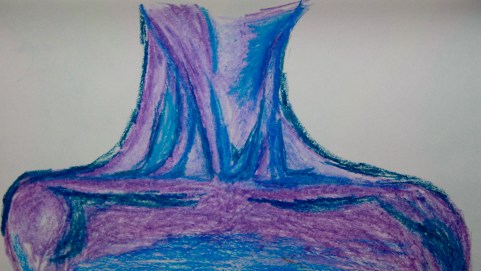

Chloe Alper, 21
Shot by Lauren Thompson
“As much as I’m currently enjoying my time off, I’m very aware of how I could easily get back into back habits.” Barbara Almeida, 21, shares, when asked about how her time has been since the beginning of Covid-19, social distancing, and the world at standstill.
In December 2019, Wuhan, China was struck with the first case of Coronavirus. This disease spread across the globe, and resulted in a universal shutdown, declaring this a pandemic known as Covid-19. The United States has since stopped the public work of all non-essential businesses, and according to statista.com, unemployment rates have increased from 3.5 percent to 4.4 percent between just February and March. With all of this newfound spare time, everyone’s lives and wellbeing has changed.
Barbara Almeida is a junior at Suffolk University. Commuting by train, she rode two hours round trip, three times per week for classes. To aid her loans, she worked 27 hours per week at a local paint store. She spent her off-time seeing friends and attending concerts. But now merely everything has come to a halt. Almeida shares,
“Now, I don’t work at all so I’m home all day, every day. I try to work on my classes from 12-5 every day, then do something creative, watch a movie, or work on a puzzle after I make dinner. I have one sister but she doesn’t live with me, I live with my two parents.”
This schedule appears similar for Travis Graham, 21, who attends the University of Massachusetts Amherst and worked 12 hours per week as a dishwasher, and is now doing schoolwork at home. The greatest struggle students face at home is distractions. Travis often plays video games when he’s not at work or school but says,
“Now that I’m always at home, and in my room, my video games are always there, and that’s all I’ll do instead of my work. I just distract myself from my priorities until the night before they’re due; it’s a vicious cycle.”

Travis swinging overlooking the view, 2020
By Lauren Thompson
Students are not only expected to abide by their class schedules in a new environment, but also figure out getting a new job, or unemployment, while still coping with life in isolation. Almeida reflects on her weeks at home, saying,
“Most of the time all three of us (her parents and her) get along, but when all of us are home it becomes too loud or there are too many distractions for me to do school work.”
This monologue of distraction and a busy schedule appears prevalent for many college students. However, chatting with Chloe Alper, 22, who worked part-time, has similar struggles. Chloe says,
“My brain has become short-sighted and a majority of my day is coping with the uncertainty of the state of the world. I now have zero income.”
Whether struggling between schoolwork and staying productive, or enduring the cruelty of unemployment in just their early twenties, there are many young adults feeling the full effects of this quarantine. Mental health is often overlooked when a person has a busy schedule, a social life and a reason to keep getting up in the morning. When all of that has stopped, and a person is forced to keep inside at home, and still continue with either schoolwork or their job, it is common to feel burned out. Whether mental illness was prevalent in their life before this isolation or not, it is common to now feel more anxious or paranoid than before, and even depressed.
Social distancing in the age of technology can drastically affect the way you view yourself, your peers, and the situation at large. There is a lot of misconstrued information, and biased posts being made along with social media platforms such as Facebook, Twitter, and Instagram. With everyone’s opinions flying across screens, no one knows what to believe and who to trust. This can differ from home to home, depending on how serious people are taking the stay at home orders, and can ruin relationships between friends if they share different views on the situation. In Massachusetts, it has been advised by Governor Baker to not leave the house except to run to the grocery store or to get an hour of exercise outside. However, wearing masks and gloves has gone from a suggestion to an unmentioned rule. The judgment a person may feel just leaving their home without a mask or gloves could be even more shameful. Almeida comments on this phenomenon, saying,
“There is a general sense of fear lingering around social media and in the general public. There has been a lack of eye contact between people in grocery stores and anywhere else as if looking at someone has been made illegal.”
Social media can not only change our views on the situation but cause larger destruction towards mental health. Seeing people enjoying the weather while you have responsibilities to partake in is another form of FOMO (fear of missing out). While FOMO usually occurs when people see others enjoying their life on social media, this has become a strange scenario of it, since we are all home. We may see others spending quarantine with their significant others or siblings, and feel jealous. This can also occur when we see others in larger homes, or with healthier families than ours, and feel jealous over that.
On the other hand, social media can make others feel bad about how they’re spending their time at home, in the race of productivity. While some may feel inclined to only get out of bed, make coffee, and watch Netflix, others are promoting their successes on social media by showing their new home workouts, the next book they’re writing, and the new painting they just finished.
While it is important to remember that social media is only the highlights of everyone’s day, and no one will opt to post the negatives about their day, it is crucial to remember that social media can remind us of what we need to do throughout the day. Lists, reminders, and a chat with friends can realign us, and remind us of the positives in each day, and things in need of getting done. Almeida shares that video chatting with friends is keeping her sane since she hasn’t received the social time she usually does. She says,
“I have been diagnosed with anxiety and depression that comes with occasional panic attacks. As much as I’m currently enjoying it (time at home), I’m very aware of how I could easily get back into bad habits since I can’t do various parts of my old daily routine that helps me stay busy and sane. With all of my upcoming concerts, comedy shows, and a vacation to Spain being canceled, it’s upsetting because I always try to have at least one event every month or two so I have something to look forward to when I’m feeling down. With all that being taken away, it’s hard to feel as if I have anything to look forward to.”
With events being canceled, schools going online, and doctors begging you to stay home if you are not greatly ill, it seems as if the world is turning to solitude in one large wave. While neither Graham, Almeida, or Alper have felt the need to seek counseling during this time, it may be harder to access these resources as well. Therapy has gone remote, meaning the homes the patients live in must have proper reception or wifi, and be secluded enough to discuss their lives and mental state without judgment. If this was in say Almeida’s case, it may be impossible to do with no rooms to quietly chat in.
Whether it be the lack of privacy or too much isolation, both introverts and extroverts are struggling during this stay at home order, each from their own sides of the spectrum. While Graham claims he is an introvert and struggles with anxiety and depression, without seeing his friends, his mental state may sometimes get worse. This same struggle is met by Almeida, who describes herself as a ‘pretty social introvert’. While she enjoys her time at home, it is crucial for her to find external things to bring light to her world as well. She states,
“I enjoy being alone and have enjoyed solitude so far (having only stopped working for one week) but I also miss being able to go out and do things in public. I’ve been doing a lot of painting and puzzles.”
Alper seems to have the most balance in this situation, living alone in a finished attic, but having her parents and newly engaged brother downstairs so she can bounce in and out of socialization. She is kept company by her new kitten, but still finds time to play basketball in the driveway with her brother when she is feeling lonely. While this scenario may seem perfect, Alper still feels emotional about her time at home.
“I have high anxiety for a 20 something wondering if her [college] degree is worth the MONEY it’s “worth”. My time at home has been okay, taking it day by day, hour by hour honestly. I’m starting to utilize my alarms more, time management is critical during these times, especially for a person like me. The night time can approach rapidly if I don’t keep track of the time passing. When this is over I’m most looking forward to bars again, I miss socializing and people watching.”

Chloe Alper, 21, In Motion 2020
By Lauren Thompson
While Alper has chosen to ‘choose peace’ with who she lives with, not everyone can do this. Students who have lived on college campuses to avoid their home life may now feel trapped and unsafe in a possibly abusive home. CNN reported on April tenth that The Disaster Distress Hotline for mental-health has spiked an 891 percent in calls, jumping from only a 331 percent in February. With numbers like this, it is prevalent that not everyone has a friend or family member to talk to, or a safe space to confide in.
The world has appeared to be in a haze lately. In April, BBC, CNN, The Guardian, and multiple other news reports share that The Pentagon has released UFO videotapes, and no one has seemed to bat an eye because of this pandemic. The crisis has shaken not only America but the entire globe. While China has seemed to have recovered, nearly the rest of the world has gone into total lockdown, and are unsure of when it will be lifted.
While every nonessential worker can stay at home to reduce their risk of physical harm during this pandemic, no one is truly safe from the wrath of mental harm while in lockdown. As we all try to distract ourselves while being even somewhat productive, some have it harder than others, in the same way that some are more susceptible to Covid-19 than others. It is important to listen to your own thoughts and feelings on how each day is, so you can truly choose how the day is spent.
When one of my final questions was asked to Graham, Almeida, and Alper, asking ‘what are the negatives of this time?’, it was quick for Graham and Almeida to say that they missed their friends and time in public spaces and events. While Alper agreed that she missed her friends as well, she replied,
“I miss my friends, but we must adapt. If you mull over the negatives, the negatives will manifest as a physical ailment as [I said before]. It’s too easy to let negatives cloud your perceptions. It’s good to know and acknowledge them, but I try my best to come up with fixes. Whether it be a mindful walk without my phone or a smoothie bowl to nourish my soul…”

A Pool of Reflection by Lauren Thompson
Citation
Barbara Almeida, 21
Travis Graham, 21
Chloe Alper, 22
Businessinsider.com
CNN.com
TheGuardian.com
Statista.com

 LThomps Art