Writing

Being Black and LGBTQ+: Taking Back Our Pride

Lauren Thompson, per Spot Easy Blogs

Two weeks ago, Spot Easy opened the conversation about LGBTQ+-owned businesses to our viewers in honor of Pride Month. However, we only briefly

touched on the discrimination and hostility Boston has projected onto the LGBTQ+ community. Today, we want to discuss why people are boycotting Boston Pride, and how we can combat racism in the Boston community and stand up for all non-white LGBTQ+ members.

As mentioned in our last article, Pride began with the Stonewall Riots of June 1969, and this was rooted in police brutality, racism, and violence, in addition to transphobia and homophobia. Now in 2021, these immoral acts of violence and murder are still happening, so how can we possibly say things have changed?

Black and Latina transgender women were at the forefront of the riots, including Marsha P. Johnson, Miss Major Griffin-Gracy, and Sylvia Rivera. We have people of color to thank for positive change in the LGBTQ community, but we have not been properly thanking them. Instead, LGBTQ+ people of color have been subjected to violence, police brutality, racism, and murder.

Not only is this a global issue, but Boston Pride, a place where all members of the LGBTQIA+ community should be welcomed and accepted, was under fire for taking ‘Black Lives Matter’ out of a public statement last June after the tragic murder of George Floyd. In addition, their board lacks any people of color, or transgender folks, and has been under fire in the past for other racially driven acts. Black, transgender folks are the entire reason Pride exists, so how could this happen?

Due to both the pandemic and this pushback from the community, Boston Pride was canceled both in 2020 and 2021. Thankfully, the LGBTQIA+ community has begun to rebuild with a different organization, focusing on BIPOC transgender folks.

Trans Resistance Massachusetts

I spoke with KB (he/they) from the board of Trans Resistance Massachusetts. Trans Resistance Massachusetts is a non-profit organization that uplifts and centers the voices and needs of the transgender and queer, Black Indigenous People of Color in Massachusetts (TQBIPOC). TRM was founded in June 2020 by Athena Vaughn, Chastity Bowick, and a handful of volunteers after Boston Pride fell short on providing inclusivity to the LGBTQ+ community. Now focusing on transgender People of Color, TRM is partnered with Transgender Emergency Fund, an organization founded in 2008. Last year, Trans Resistance Massachusetts and Transgender Emergency Fund formulated an alternative event from Pride in only one week. This event is the Trans Resistance March, Vigil, and Pride Fest, and after exceeding their capacity expectation by over 10,000 people, they have decided to make this an annual event. While KB was not on the board last year when they first hosted their event, he did share his thoughts on the situation, saying,

“2020 was a groundswell year for a lot of social movements for change, especially for racial justice. From my understanding, there was some difficulty on the board for Boston Pride for quite some time in a long-standing history of exclusion of voices of trans and queer people of color, specifically at that intersection. The white queer community, both in Boston and more generally, needs to urgently address its exclusion of transgender people of color, as the work of TQBIPOC is the reason we have the Pride, to begin with. Transgender people of color should not just be included, but should have leadership roles in every LGBTQ+ organization.”

Performative allyship is, unfortunately, a larger problem than it may appear when it comes to human rights, and choosing which side of history you want to be on. This is a large issue Boston Pride had and falls in line with many corporations that capitalize on Pride during June. Supporting LGBTQ+ community members doesn’t only happen during the month of June, yet businesses will hang rainbow flags and sell pride merchandise for that one month, and not do anything beyond this act of exploitation.

While Pride was not using their donations for keeps, from what I am aware, the organization did hide key pieces of themselves from the public, including who runs the event, what they believe in, and who is welcome. By not speaking on the Black lives that were taken in 2020, but claiming that Pride is for everyone, they left out the Black LGBTQ+ folks. Was this intentional or did Pride simply forget to watch the news last year? Regardless of their excuse, it is prevalent that change is needed, and Trans Resistance Massachusetts has provided this.

KB shares how Trans Resistance MA is in partnership with the Transgender Emergency Fund, where they are the only organization that works closely with the homeless and low-income transgender and non-binary folks in Massachusetts. The Transgender Emergency Fund aims to acquire property in Boston to properly home the folks they are supporting, and since they are entirely donation-based, our dollar matters now more than ever.

While prior to this event, the best way to support the Trans Resistance March would have been to volunteer your time to help plan and execute the event. Now that the event has passed, supporting this cause financially would be the best way. KB shares,

“We are entirely volunteer-driven and most of the folks on our board work full-time jobs in addition to doing this organizing. We have an incredible board and a number of volunteers for planning. In 2021, we began raising money for what we call the ‘Black Trans Lives Matter’ campaign. The goal we set for this year is $250,000, hoping by the time of the march we can raise $50,000.”

Prior to the march, TRM raised $46,000. However, KB shares that on the day of the march itself, donating is usually easiest to do in person at the event.

Saturday’s Trans Resistance March and Vigil were beautiful, emotional, and uplifting, just as a white, cis-gendered ally. I knew it was important for me to stand quietly in solidarity, and not make the event anything about me. I chose not to interview any of the lovely folks I spoke with to keep them safe and to assure them that I was here for more than just getting a story.

The LGBTQ+ community and the Black, Indigenous People of Color community all matter, and all deserve life, safety, inclusivity, and opportunity. At the crossroad of these two identities, lives are often lived in fear due to the transphobia and racism rooted in America. Let this article be a wake-up call, as if 2020 wasn’t already, that racism has no room in our world. No life should be taken due to the color of your skin, or what type of genitals you have. We all must do our part to keep these communities safe, and away from the hands of violence. In that same breath, we must end the violence in our country.

You can help support the Trans Resistance Massachusetts Fund, and the Transgender Emergency Fund here:

https://www.transresistancema.com https://transemergencyfund.org https://linktr.ee/TransResistanceMa
Climate Change and How We Can Change. 5/4/2020

In 2018, we were warned by the UN that we had 12 years left on Earth until global warming heated the world to a temperature too high to come back from. Activists around the globe have since begun lessening their environmental footprints and sharing their tips.


The four major environmental footprints, discussed by carbonfootprintsofnations.com, are the carbon footprint, fossil energy footprint, water footprint, and land footprint. 


Carbon footprints are created in our daily lives by what we choose to consume, how we travel, and how we dispose or reuse our waste. Dorothy Neufeld on Visualcapitalist.com wrote the article “The Carbon Footprint of the Food Supply Chain”. In this study, Neufeld included a chart regarding each food we consume and the carbon footprint it has. 


This image shows that the consumption of meat and some dairy have the largest carbon footprints. Knowing this, many Americans have opted to cut these things out of their diets. Many Americans have cut meat out of their diet. 


Gallup.com shared a two-week study in September 2019, asking Americans about their diet and meat consumption. The poll showed three out of ten nonwhite, democrat females have cut meat out of their diet, and 23 percent of Americans of all genders, races, and political parties have cut out meat as well. This study also said that seven out of ten people who cut out meat did this for environmental reasons, aside from their health. Lastly, they concluded about five percent of Americans claim to be vegetarian.


With the rise of vegetarianism came the rise of social media, at nearly the same time. Instagram, Youtube, and Twitter users have begun using their platforms to share their tips on a smaller-footprint lifestyle. The Youtube and Instagram user @Itsblitzzz, who’s real name is Julia, is not only an ASMR (autonomous sensory meridian response, meant to relax the body and mind) enthusiast, but has created numerous videos and posts regarding her low-waste lifestyle, vegetarian diet and ethical shops she purchases from. 


Julia shares an Instagram photo of her travel toiletries, makeup, skincare, and hygiene products and says,

“My routine is not perfect, not fully zero waste (is anyone’s actually?), and changes periodically. I am always trying to improve my consumer choices, purchase ethically, and lessen consumption while using up what I already have to prevent waste. These are products that are effective for me currently and mostly what I am using at home in LA too.”

These products include a reusable, silicone menstrual cup, a bar of soap, makeup and serums in glass jars, and only a handful of plastic materials. While she said, this is not perfect, and plastic is the oceans leading cause of pollution according to plastic-pollution.org, this is a great start to a lower waste lifestyle. 


As for producers, it is the manufacturer and designers’ jobs to shrink their footprint by choosing ethical production, materials, and shipping processes, if they wish to do so. One company trying to lower their waste is the Package Free Shop. I learned about this shop from Julia who posts about their products regularly. 


The Package Free Shop is one of the many producers prioritizing a low waste and low environmental footprint in their products and shipping process. Their website also shares “We’ve diverted over 26,245,944 plastic straws from landfills!“ Lauren Singer, the CEO of Package Free Shop, also publishes articles on their website, relating to low waste gift-giving, shopping, cooking, cleaning, traveling, and plenty of other ideas. In January 2018, Singer wrote in the article “Ten Waste Free Changes That Don’t Cost Any Money”, 


“JUST SAY NO– no to plastic straws, no to disposable napkins, no to plastic utensils and bags. Saying no is free, boosts your confidence, and prevents tons and tons of waste!”


Essentially, this is the best way to live a more sustainable, ethical, and environmentally friendly life. Just saying no to meat, plastic, and nonreusable things can make a larger difference if we all do it together.


These are just a few of the people and products taking the steps to shirk their environmental footprint. As time goes on, it is crucial for us to make more conscious efforts in what we consume, or climate change will negatively affect our lives for the rest of mankind. However, we can only do so much as consumers and singular people. 


Thankfully, countries around the world have begun strategizing how they can contribute to aiding in this climate crisis. Sciencedirect.com shares Maria Da Graca Carvalho’s study on EU Energy and Climate Change Strategy. Carvalho’s paper discusses how Europe can reduce up to 20 percent of their greenhouse gas emissions, and by 2020, with an international agreement, they should be down a total of 30 percent, all by switching to renewable energy. 

Isolation During Covid-19 and How The Mind Reacts. 4/28/2020

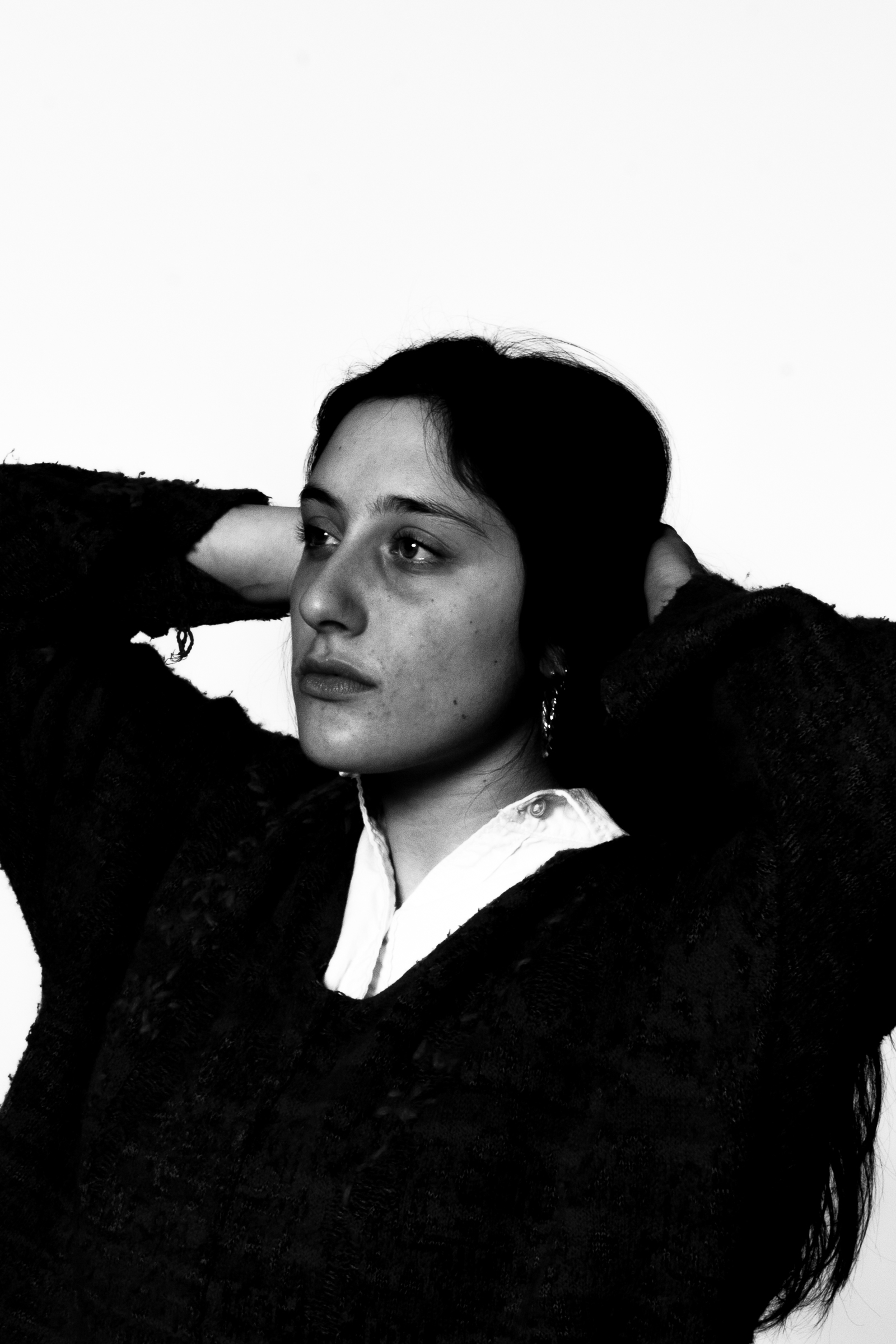
IMG_8988-2

Chloe Alper, 21

Shot by Lauren Thompson

“As much as I’m currently enjoying my time off, I’m very aware of how I could easily get back into back habits.” Barbara Almeida, 21, shares, when asked about how her time has been since the beginning of Covid-19, social distancing, and the world at standstill.


In December 2019, Wuhan, China was struck with the first case of Coronavirus. This disease spread across the globe, and resulted in a universal shutdown, declaring this a pandemic known as Covid-19. The United States has since stopped the public work of all non-essential businesses, and according to statista.com, unemployment rates have increased from 3.5 percent to 4.4 percent between just February and March. With all of this newfound spare time, everyone’s lives and wellbeing has changed.


Barbara Almeida is a junior at Suffolk University. Commuting by train, she rode two hours round trip, three times per week for classes. To aid her loans, she worked 27 hours per week at a local paint store. She spent her off-time seeing friends and attending concerts. But now merely everything has come to a halt. Almeida shares, 


“Now, I don’t work at all so I’m home all day, every day. I try to work on my classes from 12-5 every day, then do something creative, watch a movie, or work on a puzzle after I make dinner. I have one sister but she doesn’t live with me, I live with my two parents.” 


This schedule appears similar for Travis Graham, 21, who attends the University of Massachusetts Amherst and worked 12 hours per week as a dishwasher, and is now doing schoolwork at home. The greatest struggle students face at home is distractions. Travis often plays video games when he’s not at work or school but says, 


“Now that I’m always at home, and in my room, my video games are always there, and that’s all I’ll do instead of my work. I just distract myself from my priorities until the night before they’re due; it’s a vicious cycle.” 
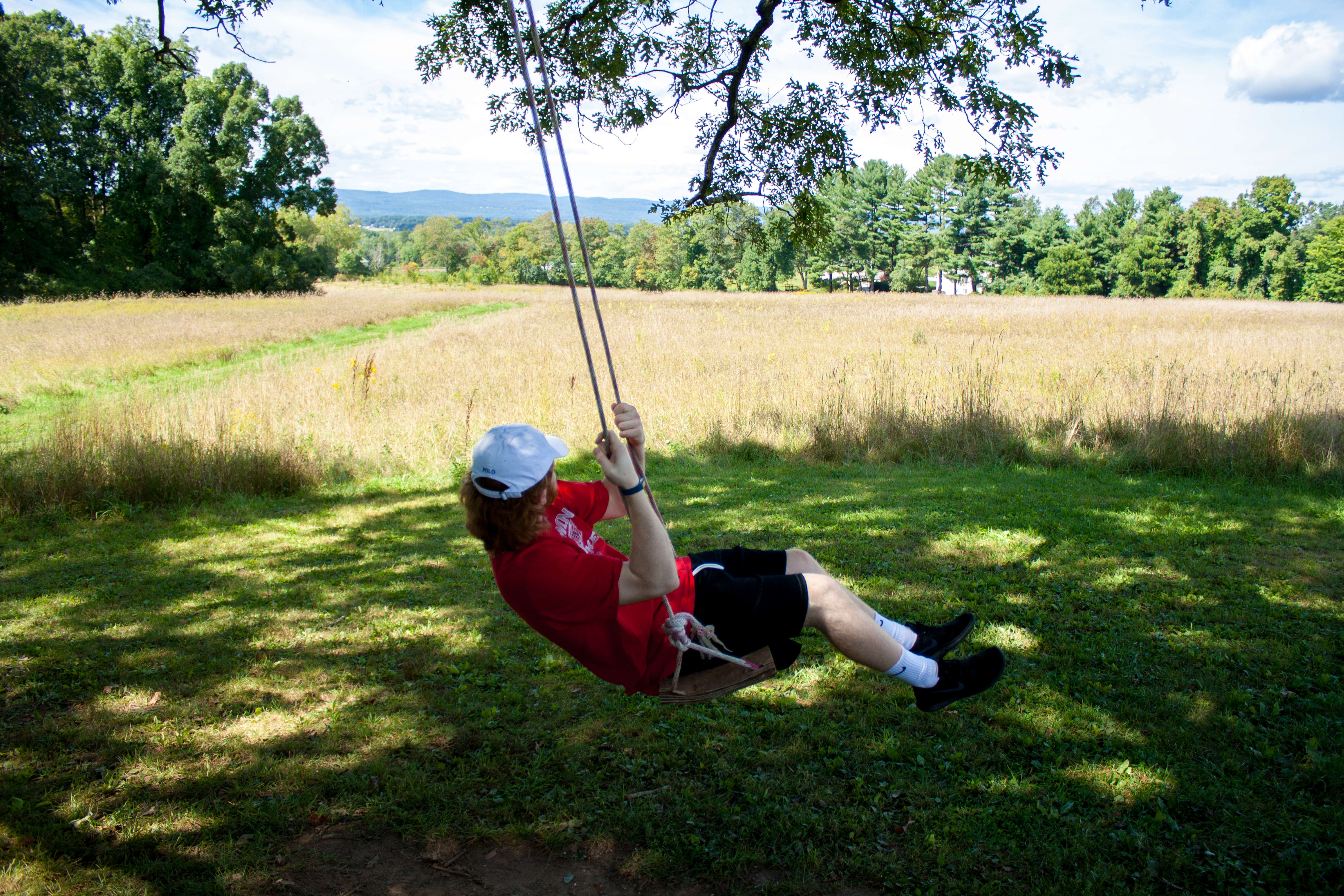
IMG_8390

Travis swinging overlooking the view, 2020

By Lauren Thompson


Students are not only expected to abide by their class schedules in a new environment, but also figure out getting a new job, or unemployment, while still coping with life in isolation. Almeida reflects on her weeks at home, saying,


“Most of the time all three of us (her parents and her) get along, but when all of us are home it becomes too loud or there are too many distractions for me to do school work.”


This monologue of distraction and a busy schedule appears prevalent for many college students. However, chatting with Chloe Alper, 22, who worked part-time, has similar struggles. Chloe says,


“My brain has become short-sighted and a majority of my day is coping with the uncertainty of the state of the world. I now have zero income.”


Whether struggling between schoolwork and staying productive, or enduring the cruelty of unemployment in just their early twenties, there are many young adults feeling the full effects of this quarantine. Mental health is often overlooked when a person has a busy schedule, a social life and a reason to keep getting up in the morning. When all of that has stopped, and a person is forced to keep inside at home, and still continue with either schoolwork or their job, it is common to feel burned out. Whether mental illness was prevalent in their life before this isolation or not, it is common to now feel more anxious or paranoid than before, and even depressed.


Social distancing in the age of technology can drastically affect the way you view yourself, your peers, and the situation at large. There is a lot of misconstrued information, and biased posts being made along with social media platforms such as Facebook, Twitter, and Instagram. With everyone’s opinions flying across screens, no one knows what to believe and who to trust. This can differ from home to home, depending on how serious people are taking the stay at home orders, and can ruin relationships between friends if they share different views on the situation. In Massachusetts, it has been advised by Governor Baker to not leave the house except to run to the grocery store or to get an hour of exercise outside. However, wearing masks and gloves has gone from a suggestion to an unmentioned rule. The judgment a person may feel just leaving their home without a mask or gloves could be even more shameful. Almeida comments on this phenomenon, saying,


“There is a general sense of fear lingering around social media and in the general public. There has been a lack of eye contact between people in grocery stores and anywhere else as if looking at someone has been made illegal.” 


Social media can not only change our views on the situation but cause larger destruction towards mental health. Seeing people enjoying the weather while you have responsibilities to partake in is another form of FOMO (fear of missing out). While FOMO usually occurs when people see others enjoying their life on social media, this has become a strange scenario of it, since we are all home. We may see others spending quarantine with their significant others or siblings, and feel jealous. This can also occur when we see others in larger homes, or with healthier families than ours, and feel jealous over that.


On the other hand, social media can make others feel bad about how they’re spending their time at home, in the race of productivity. While some may feel inclined to only get out of bed, make coffee, and watch Netflix, others are promoting their successes on social media by showing their new home workouts, the next book they’re writing, and the new painting they just finished. 


While it is important to remember that social media is only the highlights of everyone’s day, and no one will opt to post the negatives about their day, it is crucial to remember that social media can remind us of what we need to do throughout the day. Lists, reminders, and a chat with friends can realign us, and remind us of the positives in each day, and things in need of getting done. Almeida shares that video chatting with friends is keeping her sane since she hasn’t received the social time she usually does. She says,


“I have been diagnosed with anxiety and depression that comes with occasional panic attacks. As much as I’m currently enjoying it (time at home), I’m very aware of how I could easily get back into bad habits since I can’t do various parts of my old daily routine that helps me stay busy and sane. With all of my upcoming concerts, comedy shows, and a vacation to Spain being canceled, it’s upsetting because I always try to have at least one event every month or two so I have something to look forward to when I’m feeling down. With all that being taken away, it’s hard to feel as if I have anything to look forward to.” 


With events being canceled, schools going online, and doctors begging you to stay home if you are not greatly ill, it seems as if the world is turning to solitude in one large wave. While neither Graham, Almeida, or Alper have felt the need to seek counseling during this time, it may be harder to access these resources as well. Therapy has gone remote, meaning the homes the patients live in must have proper reception or wifi, and be secluded enough to discuss their lives and mental state without judgment. If this was in say Almeida’s case, it may be impossible to do with no rooms to quietly chat in.


Whether it be the lack of privacy or too much isolation, both introverts and extroverts are struggling during this stay at home order, each from their own sides of the spectrum. While Graham claims he is an introvert and struggles with anxiety and depression, without seeing his friends, his mental state may sometimes get worse. This same struggle is met by Almeida, who describes herself as a ‘pretty social introvert’. While she enjoys her time at home, it is crucial for her to find external things to bring light to her world as well. She states,


“I enjoy being alone and have enjoyed solitude so far (having only stopped working for one week) but I also miss being able to go out and do things in public. I’ve been doing a lot of painting and puzzles.”


Alper seems to have the most balance in this situation, living alone in a finished attic, but having her parents and newly engaged brother downstairs so she can bounce in and out of socialization. She is kept company by her new kitten, but still finds time to play basketball in the driveway with her brother when she is feeling lonely. While this scenario may seem perfect, Alper still feels emotional about her time at home.  


“I have high anxiety for a 20 something wondering if her [college] degree is worth the MONEY it’s “worth”. My time at home has been okay, taking it day by day, hour by hour honestly. I’m starting to utilize my alarms more, time management is critical during these times, especially for a person like me. The night time can approach rapidly if I don’t keep track of the time passing. When this is over I’m most looking forward to bars again, I miss socializing and people watching.”

IMG_9012-2

Chloe Alper, 21, In Motion 2020

By Lauren Thompson 

While Alper has chosen to ‘choose peace’ with who she lives with, not everyone can do this. Students who have lived on college campuses to avoid their home life may now feel trapped and unsafe in a possibly abusive home. CNN reported on April tenth that The Disaster Distress Hotline for mental-health has spiked an 891 percent in calls, jumping from only a 331 percent in February. With numbers like this, it is prevalent that not everyone has a friend or family member to talk to, or a safe space to confide in. 


The world has appeared to be in a haze lately. In April, BBC, CNN, The Guardian, and multiple other news reports share that The Pentagon has released UFO videotapes, and no one has seemed to bat an eye because of this pandemic. The crisis has shaken not only America but the entire globe. While China has seemed to have recovered, nearly the rest of the world has gone into total lockdown, and are unsure of when it will be lifted. 


While every nonessential worker can stay at home to reduce their risk of physical harm during this pandemic, no one is truly safe from the wrath of mental harm while in lockdown. As we all try to distract ourselves while being even somewhat productive, some have it harder than others, in the same way that some are more susceptible to Covid-19 than others. It is important to listen to your own thoughts and feelings on how each day is, so you can truly choose how the day is spent. 


When one of my final questions was asked to Graham, Almeida, and Alper, asking ‘what are the negatives of this time?’, it was quick for Graham and Almeida to say that they missed their friends and time in public spaces and events. While Alper agreed that she missed her friends as well, she replied,


“I miss my friends, but we must adapt. If you mull over the negatives, the negatives will manifest as a physical ailment as [I said before]. It’s too easy to let negatives cloud your perceptions. It’s good to know and acknowledge them, but I try my best to come up with fixes. Whether it be a mindful walk without my phone or a smoothie bowl to nourish my soul…”


blue (1 of 1)

A Pool of Reflection by Lauren Thompson


Citation

Barbara Almeida, 21

Travis Graham, 21

Chloe Alper, 22

Businessinsider.com

CNN.com

TheGuardian.com

Statista.com

Salem State Professors, Donald Glover, and Their Relation to Climate Change, 2/8/2020.

With headlines swarming the news about climate change, thanks to activists like Greta Thunberg and Ridhima Pandey, artists have now begun using their platform to discuss major environmental issues. 


Donald Glover, otherwise known as Childish Gambino, used his hit single ‘Feels Like Summer’ to discuss a deeper meaning to a hot, summer-like day. The lyrics “You can feel it in the streets, on a day like this, the heat, it feels like summer.” discusses how it is not actually summer, but it is hot like summer because of the climate changing. Gambino later sings, “I’m hoping that this world will change, but it just seems the same. Everyday gets hotter than the one before, running out of water, it’s about to go down.” These lyrics are even more evident that the song is about a greater meaning. 


The impact of the news and artists’ hidden lyrics have everyday people, like Joshua Adams, professor at Salem State University, taking climate change into his own hands. When asked how Adams lessens his carbon footprint, he shares, “I try to lessen my plastic use. I recently bought a brita to refill bottles instead of buying the plastic ones. I also get water from the teachers room on campus.”  


Gambino happens to be one of Adams’ favorite artists. Adams discussed ‘Feels Like Summer’ as “A deep, multi-layered song that you can take in different directions. It’s like everyone’s trying to have fun, but there’s this looming thing over everyone’s heads, climate change.” 


Although there are plenty of actions we must take to lower the Earth’s temperature, each step taken, even just buying less plastic water bottles, is a step in the right direction.

The Need for Interventionists in Haverhill Public Schools, 11/19/2019

The rising number of suspensions and behavioral write-ups at Haverhill Middle Schools calls for the Haverhill School Committee to increase behavior specialists in schools.


The Haverhill School Committee gathered to discuss the need for an increase in hires of mental-health officials at Haverhill public middle schools. On October 10, 2019, Committeewoman Maura Ryan-Ciardiello spoke on the matter, referring to her visits to the middle schools. “I am horrified [by] the lack of respect the teachers have, or the children, because it tickles down.” 


It has been reported by Hunking Middle School principal, Shannon Gilligan, that there are not as many councilors in the schools throughout the district as needed. Committeewoman Gail Sullivan pointed out that the write-ups in Hunking Middle School were increasingly worse in the kindergarten through 5th grade levels rather than the sixth through eighth. This may be because the higher grades have three counselors, whereas the lower level only has one. 


Nettle Middle School was a school of discussion during the meeting, since Ryan-Ciardiello stated she heard they had already suspended 20 students in the first 40 days of school.That number had the council bring in principal Shereen Escovitz, and vice principal, Eileen Doherty. The two were called to the podium where they stated they weren’t sure of the suspensions off the top of their heads, but assured Ryan-Ciardiello this number was larger than they believe to be true. However, she questioned the principals for the next half hour about how they were working on bringing better behavioral and counselling support to the school. 


Escovitz replied that the Smart Moves program was taking place in the school, where students learn about general mental-health, ways to cope with emotions and avoiding drugs and alcohol. Continuing, Escovitz says, “We can start to address some of these social, emotional issues both in the school and with outside agencies.”


As the meeting’s agenda continued, the news of free breakfast and lunch being provided to all of the Haverhill Public Schools showed that 70-80 percent of students are eating breakfast at school. Those numbers grew from 2018 to 2019 of 2,000 to 3,000 breakfasts being served per day, and 4,000 to now 5,300 lunches being served. 


Along so, the Salvation Army is offering a service ‘Backpack 68’ where students in need may receive a backpack on Friday’s filled with food and an offering of food and stability all weekend so the kids never have to go hungry when they aren’t at school. 


These two side notes hint that the problems at school may occur when students live low-budget or unsafe homelives. Although this is only a theory, Councilwoman Margrett Marcotta states, “Students learning retention is lowered when skipping breakfast.” Thus, if students are in any sort of food desert at home and need to eat all of their meals at school, this may mean that the students home life isn’t the greatest, and it will reflect in their behavior at school.

Charlie Spence in Africa, 2/5/2020

The roads across Monrovia are dirt. Sweat works as glue for a red-brown dust, sticking to skin. Trash eludes the sidewalks in a humid gust of wind. The streets are flooded with all walks of life: some of the children appear younger from malnourishment. Either smiling or in an angry haze, the offspring who survived the Civil War in Africa, welcome the American tourists. 


21-year-old Salem State University student, Charlie Spence, reflects on his experience in Monrovia, Liberia while he is back on his American campus. “You realize, nothing matters. I don’t care if my hair is messy in class today, I just saw a man who got his leg chopped off when he was seven, hobbling around at age 30.”


Charlie Spence joined four other students and two professors on a 10 day journey to Liberia, Africa on an alternative spring break trip to help rebuild their community. 


Spence began his college education as an undeclared major with a need to do something larger than take general education classes and go to the gym. After withdrawing from his freshman year classes and almost joining the Military, he postponed his drop-out and continued in classes, thanks to his parents convincing. In 2018, Spence met Dr. Greg Carroll, Peace and Peacebuilding professor at Salem State.


“I walked into class late and Greg was showing a slideshow from his travels to Africa. At the end, he asked, ‘Who wants to go?’ And I said ‘I do’, even though I just met him and had no idea what he was talking about.” After class, Greg explained to Spence that he has been taking trips to Africa since just after the Civil War with his colleagues. After larger-funding universities such as Harvard and Boston University joined Greg on the trips, promising to return with supplies to help rebuild their communities, they returned to America and never went back. Greg made sure he went back in 2004, and continued to go nearly every year since.


However, their trip for 2018 fell through, and Spence felt defeated. When talking with Charlie’s mom, Joanne Spence, she described her anger towards Salem State by saying, “This school is a fuckhole.” For the rest of the spring semester, Spence didn’t hear anything about the trip, as if the idea was never there to begin with.


In the fall of 2018, Spence had Greg as a professor again, and their trip to Africa was put back on the table. Spence, Greg, another professor and four other students he’d never met, arranged the trip and booked flights. They funded their trip by using Crowdfunding, a website through Salem State that allows online donations to go entirely towards their expenses. 


Spence says he wasn’t nervous until the night before the trip, until he suddenly realized, “Oh fuck, I’m going to Africa tomorrow.”


On Friday, March eighth, the group set off on a two-day journey from Boston, Massachusetts, to Washington D.C, from there to Brussels, and finally Brussels to Monrovia. Spence reflected on his travels, saying, “After flying and layovers for 48 hours, wearing these jeans, and a sweatshirt, it was so fucking hot. When we got off the plane, it was 100 percent humidity, you feel it first around your ankles. I was in predator mode.” 


The group of American travelers stayed in a compound in Monrovia. Spence says, “I never felt in danger. We were right on the water, but I always felt kind of dirty.” There is no running water besides what is caught from rainfalls, so showers were taken with buckets of boiling water and a ladle, and the toilets flushed by dumping water into the toilet. The beds, Spence described as, “Hard like the freshman dorm twin beds with no mattress topper.” 


The group spent the first day at West Point in Monrovia, “to shock your system”. The slums of America would never compare to the slums of Africa, post-Civil war. The streets were never fully rebuilt, and it is hard to handle nearly any manual labor since it is usually between 90 to 105 degrees. Few areas have power, let alone internet or WiFi, and the cities cut off the power at the end of everyday. 


After spending time in Monrovia, the group headed to Ghanta. Spence and other students were given surveys to ask the locals, in hopes of retrieving information about their lives to further help their situations. Spence remembers the questions being, “‘Where were you during the Civil War?’ And ‘are your parents alive?’ They were heavy, and we had to be prepared for that.” 


Aside from surveys, the main task the group worked on was Ghanta’s fish pond. The fish pond at the small, 1800’s school needs to be sterilized in order to keep the fish alive. Spence says he worked on keeping the water at a certain acidity, since it is only sterilized once a year. They also measured the fish to see if they were staying healthy throughout the year and to know whether or not to eat the fish. 


Spence says the food was delicious, eating mostly beans and rice. Greg suggested everyone bring Imodium for upset stomachs, and everyone’s favorite snacks from home. 


The people of Liberia were either very welcoming, or very reserved. Since most people questioned what the Americans were doing there, in hopes of them helping and not just observing, it was best to do every task to the fullest to prove your worth. Spence’s advice for work was to “do everything with love and care”. 


After 10 days, Spence and the others returned home. “I found a new appreciation for very basic things, running water, plumbing, not sweating, laying in a comfortable bed. You come back and realize so little matters.” Spence shares his greatest piece of advice for the trip, “Act like you’ve been there before, not like a tourist. Don’t be so surprised by how things are because they live like that everyday, it’s not shocking to them that it’s hot and they have no power or water. Keep yourself grounded and don’t act like you’re doing something amazing. Leave some things on your to-do list, like you’re coming back, because like I am in 2020, you just might.”

Have Your Meal, and Eat It All Too, 1/27/2020

As the global stance on sustainability shows the flaws in society, a factor in our world’s debt towards Mother Nature is the tremendous amount of food waste, adding to the tons of trash covering our planet. According to EPA.gov, The total of solid waste in 2017 in America alone was 267.8 million tons. Of that, approximately 27 million tons were composted. However, it is unlikely that everyone paying rent or owning a home can have their own compost pile in their backyard. 

On top of individual homes adding to the amount of waste, restaurants in the United States distribute 11.4 million tons of food waste annually, according to an reFED report. While restaurants handle a large amount of waste in their kitchens, some businesses are taking composting into their own hands with zero-waste shops. 

Rhodora, an upscale wine bar in Brooklyn, New York, is one of the many facilities trying to lessen their waste. After opening the store in 2015, Rhodora’s mission, according to their website, was to be the first of its kind in being a 100 percent zero-waste wine bar. Since then, they’ve changed shipping brands numerous times until they found the best option of every source: a cardboard shredder to turn wine boxes into composting material, a dish washing setup that converts salt into soap, beeswax wrap as opposed to plastic wrap, paper menus, and composting all of the customers leftovers that they don’t wish to bring home. This restaurant doesn’t serve meat, since it is harder to compost, but does serve fish that is composted. Rhodora’s wine bottles are recycled and the corks are given to ReCork, a business which re-purposes corks to turn into yoga blocks and shoe soles. 

When New York Times interviewed the Rhodora owners, they stated that when looking for vendors who were sustainable, one offered to remove the plastic wrap on their cheese before shipping it, by throwing the plastic in the trash, thus continuing the problem. While it does take research to find shipping methods that are zero-waste, other food services eliminating plastics from their brands are Zero, Planted Table and The Wally Shop. 

While not everyone can eat every meal at Rhodora’s or afford these zero-waste brands, simple ways to eliminate single-use plastics and waste from your own kitchen is to shop with reusable bags, buy in bulk with glass or metal containers, purchase a water filter and drink from the tap rather than plastic bottles, purchase locally grown produce rather than pre-packaged, and save your leftovers if you can’t finish your meal. A zero-waste kitchen or restaurant may not solve the global waste crisis, but every step taken is a step in the direction towards a greener planet. 

Something Old, Something New

It feels as though I’ve began and rebegun the process of creation a handful of times in my short, twenty years on earth. Finally beginning my junior year of college, it appears that my future is approaching sooner than I think, in fact it is the future now, compared to just a moment ago. Thus: the time is now.

I’d first and foremost like to thank anyone visiting this creative space from the bottom of my heart. I’ve swam around the 2D waters for years now since I dove into my soul to find my love for photography at the young age of 11, and my love for doodling has only increased since the young ages of 13 and 14. I want to use this site as an overall portfolio of my works, but also a place to share my creative process, because nothing is ever perfectly easy in the artistic flow. Most importantly, I want to grow as an artist, which I am without even knowing it, and I’d like to bring anyone along for the ride who wants a seat in the car.

The only rule for this platform is to try accept even what you may not understand. Art is different for everyone who views it, and not everything I make will resonate with everyone, and I can accept that if viewers can accept that as well. In photography, I am sharing the emotions of the world around, so naturally it is more universal. With a more introverted sketchbook, my 2D drawings, paintings and mixed-media images are more personal, and dive in deeper to my soul than a photograph of a leaf. But hey, some people like leaves more than paintings about song lyrics, and that’s okay!

Life flows, and so does creativity. I’m still finding my style and I may never even have a defined style for any of my works. What I can hope to find is emotion behind every piece, and with that I will be satisfied with myself.

Infinite gratitude,

Lauren Thompson xx